Saturday, February 13, 2016

Growing New Roots


Fredrick Douglass ~NY Historical Scociety
           For this evenings entry I’m going to modify my original plan, of relating historical conflict to the modern-day, and discuss how past experiences have shaped me as a person. I do not normally like to talk about myself, in excess, but I believe that it is important for people to document important life events and how it has helped them grow. This can be seen, historically, with the Narrative of the Life of Fredrick Douglass, an American Slave, stating that he ”… wish[es] [he] could commit to paper the feelings with which [he] beheld” (Douglass 50). Douglass does just this, as he tells the story of him as a slave, and all the external factors that make him into the man we know him to be.
            One major transition that I made, early in life, was moving from Wilmington, Delaware to Chicago, Illinois. Wilmington was a relatively quiet city that did not have the bustling atmosphere that Chicago does. In addition, our old home in Wilmington was the place I was where I spent my infancy, and first 7 years of my life. Looking back at the move, I would not expect a 7 year old to be so deeply affected by it, but I distinctly remember being very homesick for my first 2-3 years in Chicago. Despite all my initial displeasure, I can safely say that living in Chicago benefited me greatly. Admittedly, it was an awkward transition, but the community I moved into shaped me both mentally and spiritually.
Hindu Mandir of Lake County
            Something that I did not expect to happen was an increase in my spirituality. I am a practicing Hindu, but I was never very active with any temples or religious groups within the community. After moving to Chicago, I found a small, but tight knit group of fellow American bourn Indians who wanted to explore our cultural identity. We would go to the temple, which was about 30 minutes away from home, and made it a communal activity for Saturday mornings. This turned into something that we began looking forward to, as we would spend the rest of the days with each other. Despite all everything else that happened, early on, this has to be one of the most memorable experiences I have ever had.
Moving is difficult for anyone, and it proved to be quite disorienting for me. By having a close group of friends, it made the transition smoother, laying a strong moral and spiritual foundation for my future. Though I am not as active, in the Hindu community in Irvine, I will always hold my group of temple friends close to heart. While I cannot compare the hardships of moving, to what Fredrick Douglas had to go through, writing this entry has opened my eyes to all that I can recall, and document through writing. Though this entry has largely been me reminiscing over my youth, I am glad that I can write it down, and understand how these experiences have made me who I am.

Works Cited
Douglass, Fredrick. Narrative of the Life of Fredrick Douglass. New York: Penguin
Group, 1845. Print.

Saturday, January 30, 2016

Contemporary Conflict


                       For this blog entry I like to go back to my original theme of relating old issues of war to the modern-day. In the Humanities Core lecture that I that I’m attending, some interesting points have been brought up about how the Civil War will be remembered. Professor Alice Fahs, of University of California Irvine has gathered opinions on this subject, and states that “As many historians have pointed out, although the North won the war, by the turn of the century the South had in many ways won the battle for the memory of the war. Thus, history and memory radically diverged” (Fahs).
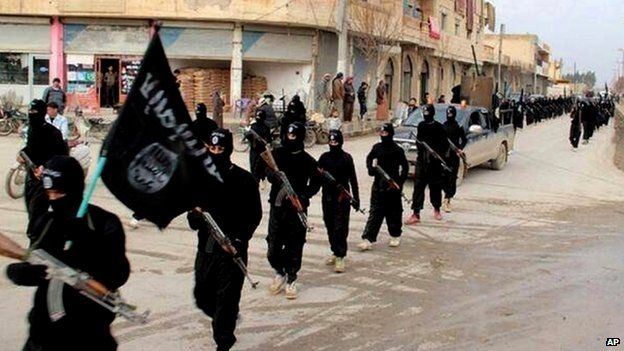
ISIS fighters in Ramadi ~ Associated Press
                       After reflecting on this topic thought, I considered what wars or conflicts, that taken place over my lifetime, have had a lasting impact, and will be remembered in the future as such. The most notable war is likely the United States invasion of Iraq, and subsequent invasion of other Middle Eastern states. Despite this conflict happening at the beginning of my adolescence, I cannot think of a more contemporary and pervasive military conflict happening than the Islamic State that has been seizing land in Iraq, Syria, and other parts of the Middle East.
ISIS militants are fighting government forces in Syria~ Associated Press
                       Islamic State of Iraq and the Levant, also known as ISIS or ISIL, has fiercely taken over towns, cities, and portions of countries. I talked about the history behind the Islamic State’s policies in my very first blog post, but their legacy is something that I briefly touched on. The Real Clear World made a rather bold statement saying that, “The Islamic State will die only when the Middle East is reborn.” They do go on to say that this will not happen in the near future, if it is to happen at all, but with the way that relations in the area have come to be it could very well happen.
                        With ISIS strongholds being contested by recent strategic attacks by local and western military, there is a chance that the caliphate may fall in the near future. ISIS faces growing challenges as they move on to Iraq’s capital, Baghdad and Iraq's Shia south or against the Kurds. They are now threatening an oil exporter, and challenging Iran, and threating to seize other states in the Gulf States. This may force rival states to work together to fight against a common enemy. “Oil is simply too important to let ISIS seize all of Iraq, although creating any kind of unified front or rapid effective resistance to this level of ISIS gains does not seem likely” (Cordsman). As ISIS moves forward, with their stagey with success, they could be a permanent fixture in the future of the Middle East and beyond.


Works Cited


Cordsman, Anthony. "Viewpoint: ISIS Goals and Possible Future Gains - BBC News."

                       BBC News. BBC World News, 12 June 2014. Web. 30 Jan. 2016

Fahs, Alice. "Picturing the Civil War 4: The Memory of the War – Picturing US

History." Picturing US History All. American Social History Project, 16 June 2013. Web. 30 Jan. 2016.

Miller, Aaron David. "5 Reasons the U.S. Cannot Defeat ISIS." 5 Reasons the U.S.

                       Cannot Defeat ISIS. Real Clear World, 6 June 2015. Web. 30 Jan. 2016.


Monday, January 25, 2016

Searching Through Seas


Charlie Smith, 1976. Photograph by Peggy Kehoe
            Last week’s entry took a deep look into the relation between imagery and peoples beliefs. For today’s entry I hope to do the same, by bringing back my central goal of relating the topic of discussion to modern beliefs. I will be talking about Charlie Smith’s interview with the Library of Congress that took place during March 17, 1975.
In this interview he talks about the direct contact and relations that he had with other African people, being brought on boats to serve as slaves and how they interacted with him.
            Elmer Sparks, opens up with the following question,
            “…Mr. Smith, what is your full name?”
            To this question Mr. Smith is a lengthy reply. He talks about s the circumstances under which he got on the boat that I brought him to America, along with the conditions and situations he faced on the boat that came over from Galina, Africa.
            The circumstances under which Mr. Smith was brought to the United States were rather odd. He details an account where he asked his mother if he could see the white man landing on shore, and the next thing he knew he was asked to go down the hatch hole of the boat. This makes it clear that he did not have the permission of his mother to go on the boat and that he was largely taken against his will. This appears to have been the case for a lot of Africans that were brought to America as slaves and those were sold as slaves across the continent.
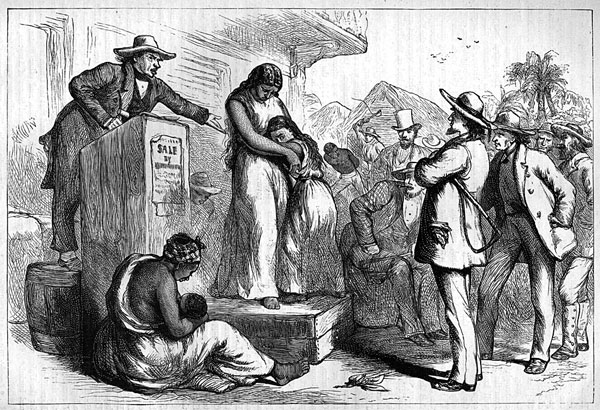
            On the topic of selling slaves, who were brought onto the boats, Mr. Smith that has a rather startling account of the process. He says that all the slaves were constantly harassed while they were on the boat and were threatened with even worse. He was taunted with a variety of punishments by the white ship crew, and was even threaten to be thrown overboard. The actual sales were took place in South Africa. The people who captured the slaves would placed them one by one, regardless of family or grouping, and selling off to the highest bidder.
         
Selling of Slaves ~ Bristol Radical History Group
  
After being sold to a slave master that was located in New Orleans, Louisiana, Mr. Smith talks about what would happen to slaves that had run away. He talks about how individual or groups of slave masters would put bounties on a slave or multiple slaves, had their escaped together.
“…[the slave owners], put out the five hundred dollar reward anybody would go get him. There was six men right at the line of the states. You had to get your authorities from them to go over there. Everybody go over there and get them five…hundred dollars, them mens would kill them. Kill them. [unintelligible] They'd kill you.”

With the immense amount of mental and physical abuse of slaves had to endure, it shape their cultural identity in a very unique way. Old tales tell of slaves singing songs together, well working in the fields, and even teaching each other how to read and write. All of this symbiotic behavior appears to have stemmed from the fact that they were stripped of their identities. Their names were changed to that of their masters, their local language had changed, and working with each other was all they had.


Works Cited

Sparks, Elmer. "Interview with Charlie Smith, Bartow, Florida, March 17,
1975." The Library of Congress. Library of Congress, 17 Mar. 1975. Web. 24 Jan. 2016.

Monday, January 18, 2016

Cartooning Separation

 Deviating slightly from my normal theme of relating wartime writing to the modern day, I will be exploring how imagery from the Civil War shaped cultural values of the period. Though there are lots of very stunning and historically relevant photos from the civil war, I will be exploring the cartoons and illustrations from the period. The Civil War illustrations are some of the most accurate representations of American’s feelings at the time, while revealing undertones of thought and discrimination.
The source for a lot of the Civil War cartoons is Harper’s Weekly. Harper’s Weekley began publication in 1857 as "a journal of civilization", and contained notable coverage of the US Civil War” (Online Books Page). 

A Man Knows A Man - April 22nd, 1865     Harper's Weekly


                  The first image I would like to look at is a Harpers Weekly illustration titled, A Man Knows A Man. Both the image and the caption are quite powerful in conveying the message of equality and sacrifice. The caption says, “’Give me your had, Comrade! We have lost a leg fro the good cause: but, thank GOD, we have never lost HEART.’” Military service was seen as a “rite of passage” that turned boys into men, particularly during the time of the Civil War. Physical scarring or maiming served as the visible symbol of manhood tested and earned through combat. The message of white and black Union soldiers having made the same sacrifice not only proves that they are equal in manhood, but equal as human beings.
            Despite the largely positive nature of the illustration, it is not entirely accurate with regards to African American involvement with the Union army. Although black men volunteered to serve in the Union armed forces as soon as the Civil War began, many of them were rejected due to a federal law from 1792, which prohibited blacks from bearing arms in the United States military. Even though the Union army was fighting for the emancipation of Blacks, they were still quite prejudiced. Black servicemen were segregated from whites in special "colored" units under the leadership of white officers. In addition, black servicemen were also paid less than their white soldiers of equal rank. A black soldier would make $7 per month versus $13 of his white counterpart (HarpWeek).
            The next illustration comes from Frank Leslie’s Illustrated Newspaper. Leslie’s paper often took a strongly patriotic stance and frequently featured cover pictures of soldiers and heroic battle stories.
           

Frank Leslie's Illustrated Newspaper  October 26th, 1861

The image is captioned, “Dark artillery; or how to make the contraband useful.” The origin of the term “contraband” comes from the Fort Monroe Doctrine. Escaped slaves who made their way to Union lines were declared as “contrabands of war,” and not subject to return to their confederate owners. As contraband, runaway Blacks were taken in by the Union Army to serve as field laborers, construction workers, domestic workers, and in a variety of tasks that paralleled their prior status as slaves.
As this cartoon further illustrates, racism was most definitely not confined to the South. Just as the previous image showed comfortable race relations between the white and black soldier, it did not speak to all the underlying policies that Union soldiers employed to further promote segregation and prejudice. Exposing these kinds underlying ideas is the reason that I chose to write this entry about illustrations from the Civil War. It promotes further investigation, while providing the initial platform for research.

Works Cited

"Frank Leslie's Weekly 1852-1922." Accessible Archives Inc. Accessible Archives, n.d. Web. 8 Jan.
2016. "
HarpWeek: Cartoon of the Day." HarpWeek: Cartoon of the Day. Harpers Weekley, 22 Apr. 1865. Web. 8
Jan. 2016.
"The Online Books Page." Harper's Weekly Archives. University of Pennsylvania, n.d. Web. 9 Jan. 2016.

Sunday, November 22, 2015

Modern Machiavelli


For today’s posting I’m going to deviate from the topic of war for just a bit to talk about the political power in America. All across the world there are different governments with different philosophies. Some are based heavily around religion, some around communism, and some around democracy. Though it may sound quite strange, the current government of the United States employs many Machiavellian techniques on governance. Throughout today’s post I will be talk about some specific examples of how specific Machiavellian factors have created deep inter governmental struggle.
 
biography.com
Even though Niccolo Machiavelli died nearly 500 years ago, his book The Prince is widely regarded to be one of the most important and influential works of western literature ever (oedb.org). The book places a strong emphasis on the need for The Prince (or the governing body) to abandon principles and act ruthlessly and immorally, on occasion, to achieve a particular objective, or to maintain and expand power.


thecoloradoobserver.com
I am putting my personal political affiliation aside, as I will be talking about how the two main political parties (republicans and democrats) are acting upon these Machiavellian principles. Both parties have an agenda of various social and political policies that they would like to put into practice. Both parties have a set of values that they would like to instill, but only one candidate from one party can hold the position of Commander-in-Chief of the United States, and thus a conflict of maintaining power.

Throughout the course of American history, and particularly in modern-day partisan politics, we both innocent people as well those in power being attacked (in all sense of the word) in order for a group’s political gain. Whether it be the Red Scare of the 1950s or the controversy over Obama’s birth certificate of 2011.  These types of deceitful and baseless attacks are encouraged by Machiavelli in The Prince, which prompts the famous quotation from chapter 17.

 “…a debate arises with her is better to be loved than feared or the contrary. The answer is that one would want to be both the one and the other, but because it is difficult to join them together, it is much safer to be feared than love, if one has to do with that one of the two ” (Machiavelli 91).  
 

politico.com
This perpetuation of fear is exactly what is happening in American politics today - Democrats fear the legislation proposed by Republicans and vice versa. This creates immediate conflict between the two groups when discussing any issues, no matter how trivial. This behavior escalates as a more extreme legislation is presented to appeal to the extreme views that result from the feud. 
             
             All of this internal conflict would be fine if there was one objective voice of reason, and in the Machiavellian model, that is the prince; we do not have a prince. We have a government that has fallen into the hands of designed conflict with no one to make proper decisions in the best interest of the people


Works Cited

Machiavelli, Niccolò, and William J. Connell. The Prince: With Related Documents.
Boston: Bedford/St. Martin's, 2005. Print.

Scott, John T., and Robert Zaretsky. "Why Machiavelli Still Matters." The New York
Times. The New York Times, 09 Dec. 2013. Web. 22 Nov. 2015.

Staff Writers. "50 Books That Changed The World." Oedb.org. Online Education
Database, 26 Jan. 2010. Web. 21 Nov. 2015.
 

Wednesday, November 18, 2015

Control at a Cost


New York Mag

           Throughout our discussion of war, from ancient epics to modern examples, I will look closer into the Theater of War that was touched on in the last posting. Thought there are no online arrangements to steam this film, I strongly suggest that you watch it before or after reading this post. Throughout this posting I would like to analyze the extent of the individuals, both in the play and in the creation of the performance, ability to delegate and receive authority. In addition I will observe the casting choices and artistic decisions made in the making of the play.
            When looking at the characters practices of authority it is important to note to ask with authority and who is acted upon. Over various parts of the documentary we see how the formation of Mother Courage is both influenced by Meryl Streep in the director John Walter. Streep notes how Mother Courage places monetary gain over the well being of her family and others.  In one particular scene, which really sticks out to me, Mother Courage is asked in a panic to provide cloth and bandage up someone that is been severely injured and is bleeding out. When a man asks Mother Courage for any cloth that she has, she says that she does not want to give any to him because they will get soaked with blood and become unsellable. This is a prime example of how Mother Courage exerts control through her restriction of material while displaying her flawed values, placing peoples lives behind making a quick buck.
Art Scene In Whales
             It is hard not to have an artistic appreciation for the play, especially after having researched the author and seen the movie. Though I do find the vast majority of the choices, made for the performance, to be quite good, I must agree with the “The Courage of Their Convictions” from New York Magazine stating that Meryl Streep as Mother Courage is clearly a miscasting. The whole point for Brechtian theater is that it is didactic while minimizing the interaction and any connection made to the audience by the actors. Given Meryl Streep’s extensive resume, I believe that she brought too much attention to the play. Though I do admit that an increase in the public’s exposure to Brecht is good, I do not believe that he would like publicity for his plays to be brought about in such a manor. 


Works Cited

Demack, Ian. "Why Machiavelli Matters." Forbes. Forbes Magazine, 24 Sept. 2008.
Web. 30 Nov. 2015.

McCarter, Jeremy. "The Courage of Their Convictions." NYMag.com. New York
Magazine, n.d. Web. 30 Nov. 2015..


Wednesday, November 11, 2015

What is War Worth?


Though my last two postings have been about modern coverage of war, this posting will focus on how the 30 years war is seen in various works and interpretations over time. The two examples that I will be focusing on are Bertolo Brecht’s Mother Courage and Hans JakobChristoffel von Grimmelshausen’s Simplicius Simplicissimus. Over the course of this posting I will observe similarities and differences of genre and storytelling.
            First, let us take a look at Bertol Brecht’s Mother Courage. The first thing to consider, especially when looking at any work by Brecht, is the underlying mission of his play as well his past experiences that have shaped the playwrights vision. In Theater of War, Director John Walter takes us into the mind of Bertol Brecht, and what led him to create one of the greatest plays about war, specifically in the epic genre. The documentary itself does a fantastic job of combining the history of Bertol Brecht’s life with the deliberate and artful decisions made by the plays translator Tony Kushner (who is a playwright himself). Meryl Streep plays the strong, steadfast, yet money driven Mother Courage. We see her character develop from the initial table readings to the final product. If you watch the documentary (which I highly recommend you do), Brecht’s philosophy of the audience is evident – he does not want an emotional audience, as he wants to teach people through his plays. When people would express emotional responses at his plays, Brecht was known to get extremely frustrated with both the audience and himself, thinking that he had not done his job to separate the didactic nature of his plays from the characters that he had created.
pierre-marteau.com
            Standing in stark contrast to the dynamic and impactful performance of Brecht’s Mother Courage, is Grimmelshausen’s Simplicius Simplicissimus. The story follows a homeless hermit, who is unbelievably naïve, as he goes through the motions of the 30 years war. In fact, Simplicius’s is called Simplicius because he is so simple that he does not even know his own name. This picaresque novel pokes fun at the dimwitted nature of Simplicius, as he is constantly taken advantage on and thrown in awkward situations that he has absolutely no idea how to deal with. This genuine naiveté is shown as Simplicius is tasked with watching sheep on his family’s farm where he was told to watch out for wolves that may attack his sheep; simple right? Well, the only thing that he knows about wolves is that they have 4 legs, like the majority of land mammals. When he sees horsemen come onto the field, where his sheep are, initially thinks they are wolves (since they have 4 legs), but when the horsemen take Simplicius away, he assumes that they are looking after his sheep. In reality, the horsemen came to pillage the land and the farmhouse. It is with a series of such woeful, yet humorous events that this novel shows the more simple impacts of war. 

http://www.history.com/topics/thirty-years-war

            When comparing these two texts, there is a great deal of underling similarity between two characters that appear to be worlds apart. While Mother Courage is far more independent that Simplicius, both of their lives are directly affected by the war that is going on around them. Mother Courage’s livelihood is based upon there being a war, so she can sell her goods, while Simplicius becomes more than just another hermit because the war has placed him in such odd situations. The Thirty Years war, setting of Mother Courage and Simpliccius Simplicissimus, was “… a pointless, grotesquely protracted, gruesome catastrophe for everyone except the handful of victors among the European aristocracy who profited from it,” detailing how, in some extreme cases, life is dependent on war (Kushner).


Works Cited

Brecht, Bertolt, Tony Kushner, and Charlotte Ryland. Mother Courage and Her Children = Mutter
Courage Und Ihre Kinder. London: Methuen Drama, 2009. Print.

Grimmelshausen, Hans Jakob Christoph Von, and George Schulz-Behrend. Simplicius Simplicissimus.
Indianapolis: Bobbs-Merrill, 1965. Print.

Kushner, Tony. "Tony Kushner: Mother Courage Is Not Just an Anti-war Play." The Guardian, 8 Sept.
2009. Web. 10 Nov. 2015.

Theater of War. Dir. John Walter. Perf. Cast of Mother Courage. Publics Theater, 2006. Play.